By David Tyler, Artemis Technologies.
For many U.S. cities, public transit has long been defined by buses, trains and subways. Yet for communities with access to waterways, an underutilized opportunity exists – ferries. As cities grapple with congestion, carbon emissions, and aging infrastructure, ferries present a cost-effective, scalable and sustainable way to move people efficiently.
Data from Artemis Technologies’ The Future of Sustainable Transit Report highlights the challenges that transit agencies face – 49% of Americans give their city’s public transit a C grade or lower, while 64% report experiencing disruptions such as delays, cancellations, or long wait times. Many urban residents want expanded service areas, more frequent schedules and cleaner transportation options.
This charts a course for ferries to become a central part of the transit mix. Unlike fixed rail and road systems, ferries can be deployed quickly and flexibly, often without the high capital costs of new rail or highway infrastructure. For transit agencies, this means the ability to scale service in line with demand and expand reach to waterfront communities.
Cost and operational advantages
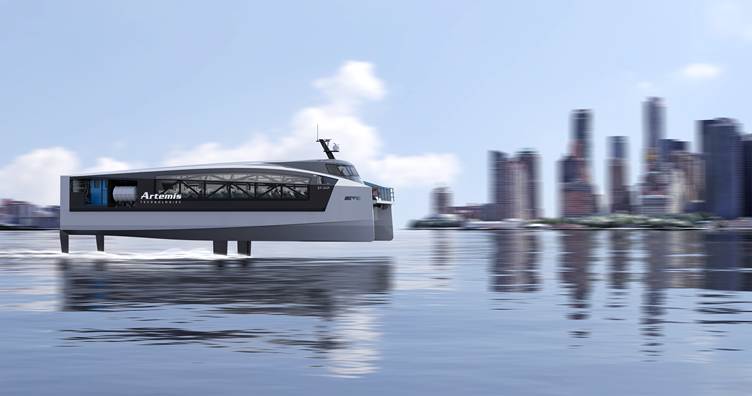
Modern ferries don’t just benefit riders – they also make financial sense for operators. Through manufacturing in lightweight composite materials and adopting foiling technology, like the Artemis EF-24 Passenger – a 100% electric, passenger ferry set to launch at the end of this year, significant operational savings can achieved which fundamentally change the economics of modern day ferry operation.

Caption: The Artemis EF-24 Passenger is manufactured using lightweight composite materials
Leveraging foiling technology reduces drag and drastically cuts energy use, while eliminating fossil fuel dependence. This leads to significantly lower operating expenses. Maintenance requirements are also reduced compared to conventional ferries, helping operators optimize their total cost of ownership over the vessel’s lifetime.
For more flexible, smaller-scale operations such as on-demand water taxis or private transport, Artemis Technologies also offers the Artemis EF-12 Escape, an all-electric foiling vessel designed for high-performance, zero-emission journeys. Together, these vessels demonstrate that electrification and efficiency aren’t distant concepts – they’re already here.
Building better transit experiences
Ferries offer more than just a different route – they can transform the commuter experience. Hydrofoiling vessels like the Artemis EF-24 Passenger lift above the water, reducing drag and allowing smoother, faster journeys even in wavy conditions. For passengers, that means greater comfort, reliability and fewer disruptions compared to traditional ferries.
A smarter, cleaner future
Public sentiment makes one thing clear – commuters want transit that works and works sustainably. Incorporating ferries into a transit mix not only eases pressure on congested road and rail networks but also supports local sustainability goals by providing zero-emission transport options.
For decision makers, ferries represent an opportunity to deliver immediate impact – cleaner commutes, lower costs and more resilient transit networks without the long timelines of large-scale infrastructure projects.
Funding and operational support
Many federal, state, and local programs support waterborne transit initiatives. For example, California’s Air Resources Board (CARB) Clean Off-Road Equipment Voucher Incentive Project (CORE) offers point-of-sale discounts on zero-emission vessels, such as the Artemis EF-12 Escape, helping offset upfront costs. The U.S. Maritime Administration’s Port Infrastructure Development Program (PIDP) funds port upgrades to support clean maritime technologies.
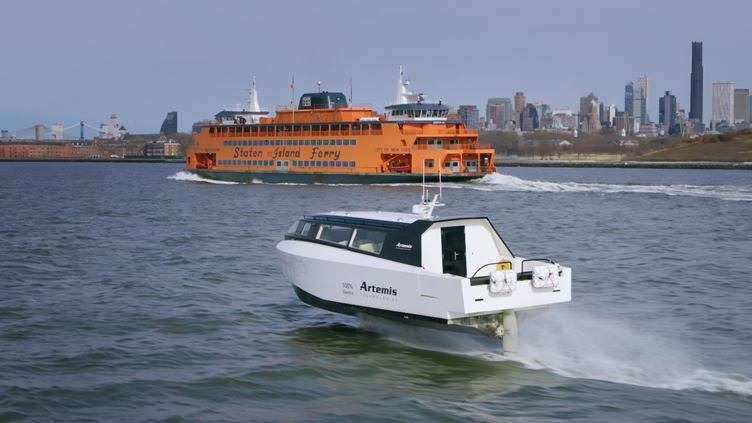
Caption: The 100% electric Artemis EF-12 Escape
Running ferry services requires specialized knowledge – from vessel operation and crew training to safety protocols and terminal management. Transit agencies can benefit from partnerships with experienced operators and maritime consultants to ensure compliance with regulations and efficient daily operations. Engaging with vessel manufacturers and maritime consultants early in the planning process helps tailor solutions to specific operational and regulatory requirements while aligning with U.S. Coast Guard regulations.
For those seeking practical, scalable solutions to transit challenges, integrating modern, electric and efficient ferries is a clear path forward. These vessels combine cutting-edge technology with operational savings, delivering cleaner, more reliable service while helping to ease the strain on existing infrastructure. The time to act is now – embracing waterways in the transit mix unlocks immediate benefits for communities, commuters, and operators alike, building stronger, more sustainable urban mobility networks today.
—-
David Tyler is Co-Founder, Artemis Technologies.
He will be speaking about the role of electric ferries in the future of marine transit at this year’s Ferries Conference, October 16, 2025 in Seattle.